The Russian Roots of Trump's Venezuela and Greenland Operations
We find that Trump's current moves against Venezuela and Greenland have roots in a long-running Russian influence campaign intended to provoke these outcomes.
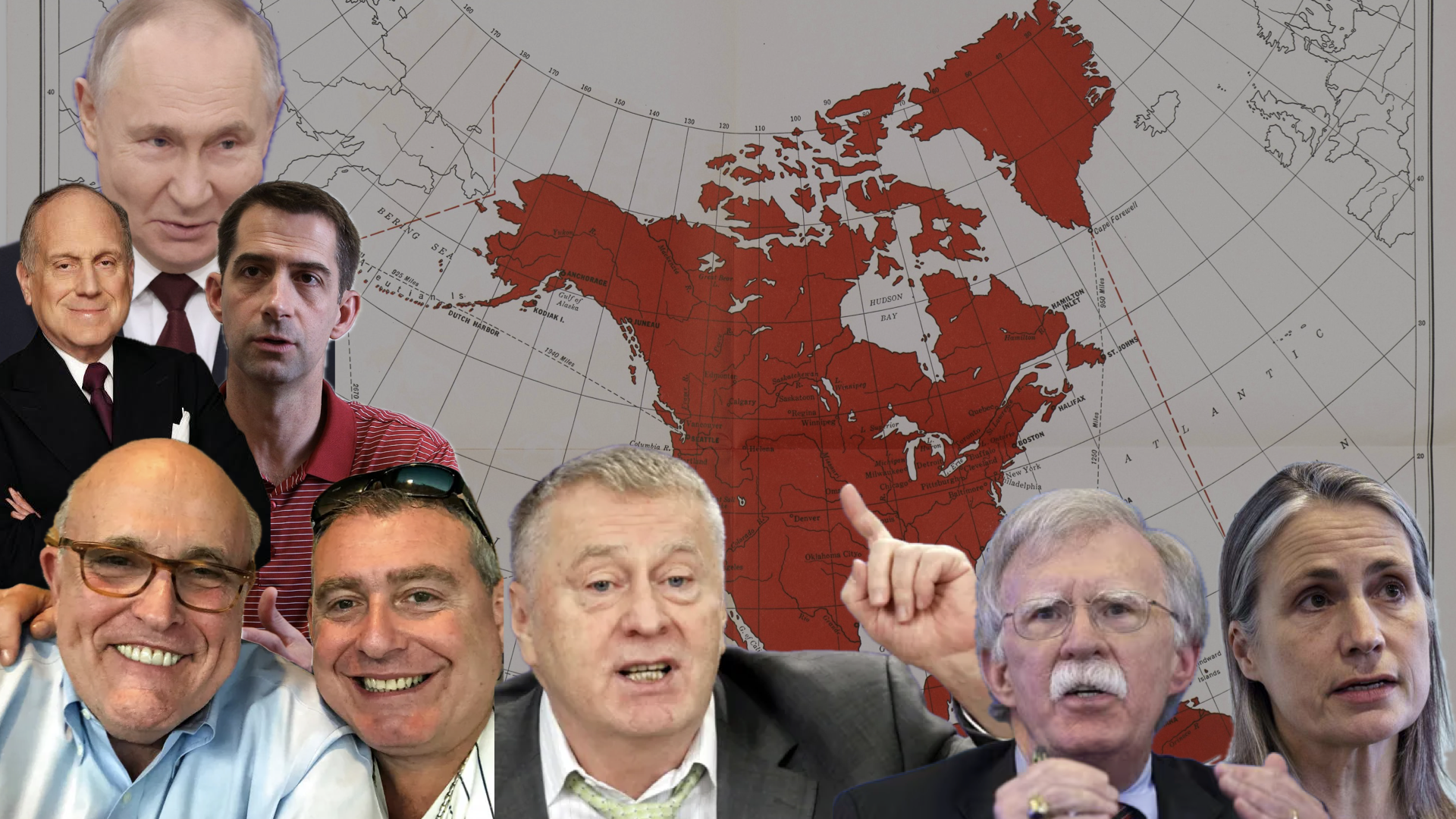
An investigation by America 2.0 has revealed that Vladimir Putin has been attempting to influence Donald Trump to seize both Venezuela and Greenland since at least 2017. The effort, rooted in Putin's ambitions in Ukraine, hinged on American embrace of the Monroe Doctrine, the 1823 policy framework that focused American influence within the Western Hemisphere.
Putin's reasoning, according to witnesses familiar with the proposals, is simple: if Trump would agree to disengage in Ukraine, Putin would agree to give Trump control in Venezuela. Each country is in the other's “backyard,” the story went, so if Trump got relief in his backyard, Putin could expect reciprocation in his.
Rather than approach Trump outright with an explicit quid-pro-quo arrangement, Putin arranged a series of dangles and provocations that he hoped might prompt Trump to follow Putin's plan.
The Origins of Trump's Greenland Obsession
Ron Lauder, the cosmetics heir and confidant to both Trump and Putin, initially approached Trump with the idea to buy Greenland in 2017. According to the 2022 book The Divider by Peter Baker and Susan Glasser, Trump took it to his National Security Adviser, John Bolton, saying, “A friend of mine, a really, really experienced businessman, thinks we can get Greenland.” Lauder even volunteered to serve as a “back channel” to the Danish government and help drive the negotiations.
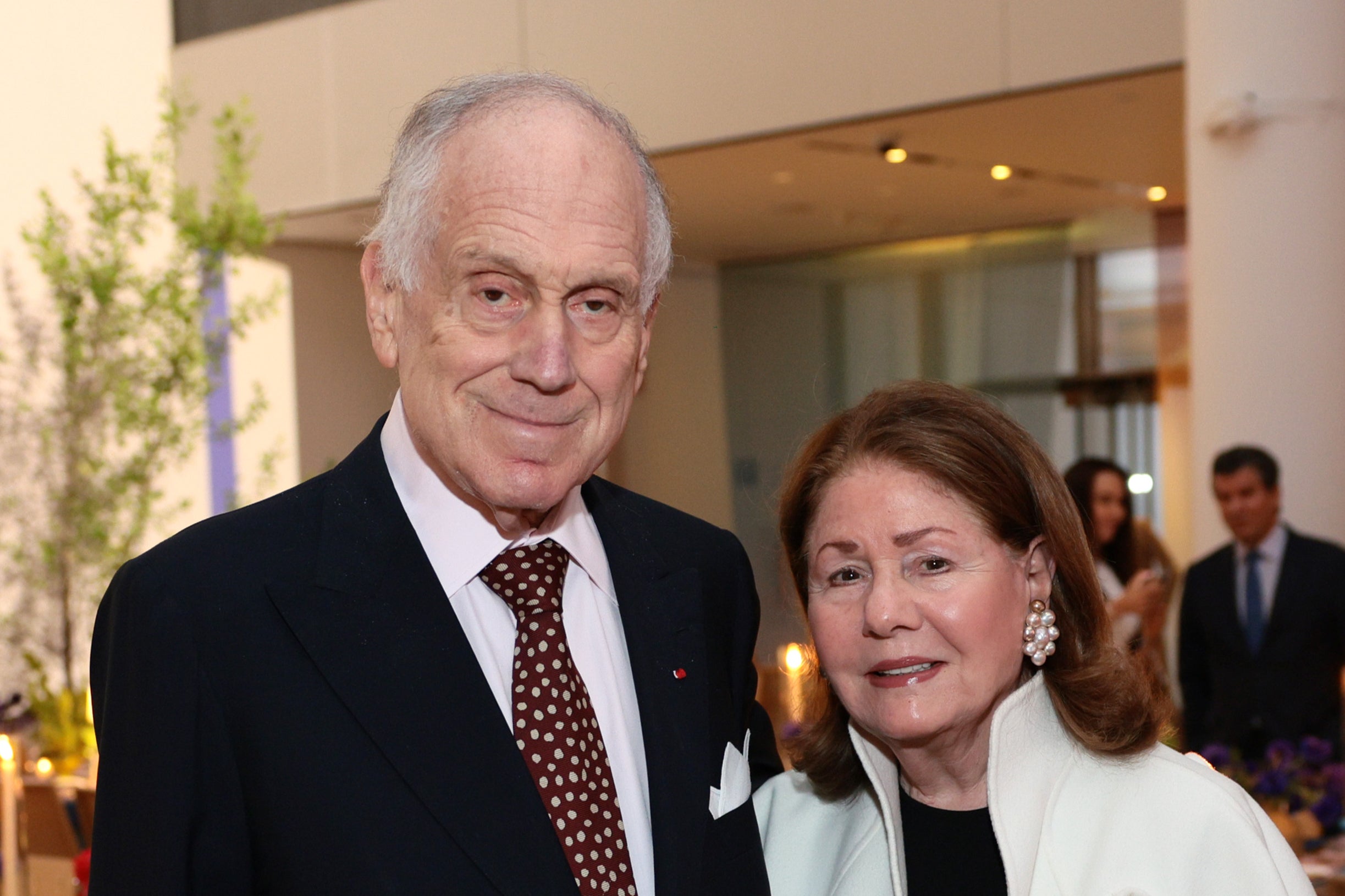
Bolton did not initially reject the idea, reasoning that an expanded relationship with Greenland might serve American interests. But he also knew the notion of buying Greenland was next to impossible; Truman had tried to do so and failed in 1946, and the Danes were still uninterested. Bolton also rejected the idea of Lauder as emissary. By 2018, knowing Trump would likely not drop the idea, Bolton instructed his aide Fiona Hill to at least explore the idea.
Hill and Michael Ellis, a National Security Council lawyer, met secretly with the ambassador to Denmark to develop ideas that might be workable, with the knowledge that a purchase was impossible. They brainstormed various alternatives, but Bolton instructed them to stop in favor of more important work.
But Trump didn't let it drop, and also became fixated on Puerto Rico. He threatened to shift hurricane relief funds from the island commonwealth towards acquiring Greenland, going so far as to even propose a trade of Puerto Rico for Greenland — a bargain the Danes would surely find bizarre.
 Miles Taylor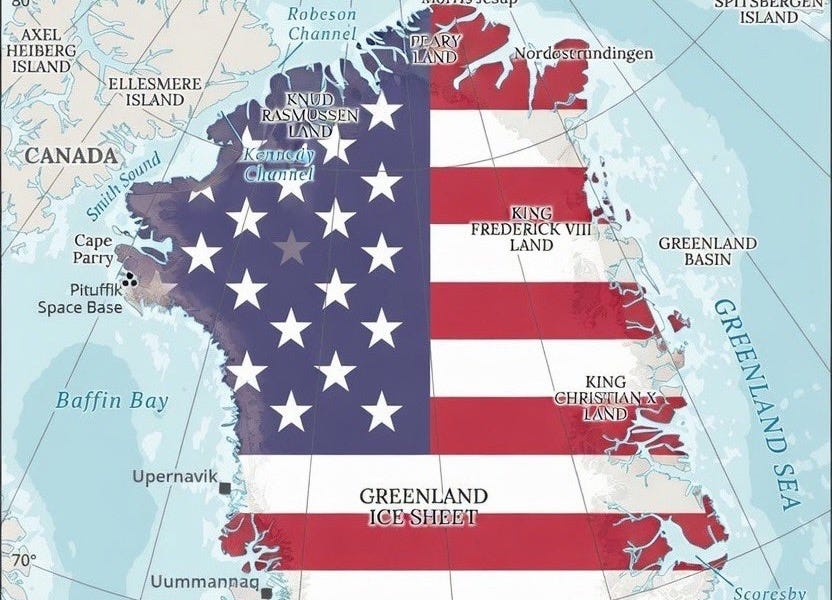
Bolton planned to meet with the Danish prime minister to broach a discussion on Greenland, but after an August 16, 2019 story in the Wall Street Journal revealed Trump's interest, the Danes predictably reacted poorly, with one party spokesperson saying, “If he is truly contemplating this, then this is the final proof that he has gone mad.”
With Trump's intentions now public, he lost all interest in the deal, cancelling planned trips by both Bolton and the president to Denmark. Trump didn't want to pursue it unless it could be done in secret. Bolton resigned as National Security Adviser a few weeks later.
Meanwhile, Ron Lauder, who was also the president of the World Jewish Congress (WJC) had met again with Vladimir Putin, ostensibly to discuss issues of interest to the Jewish community in Russia. Kremlin records confirm that Lauder met with Putin on March 19, 2019 — right when the administration's still-private talks on Greenland were at their peak. Lauder went on to make a series of direct investments in Greenland, including in the infrastructure, energy, mining, and consumer sectors, with some analysts warning that Lauder's investments were strategic in nature and intended to eventually facilitate American control over the island.
Turning Up the Heat in Venezuela
Venezuela had long been a source of irritation for the United States. An important oil producer and client state to both Russia and China with unstable politics, different administrations had adopted policies intended to shape Venezuela in various ways. With its relative proximity placing it in the United States’ sphere of influence, Putin believed he could use it as a platform for provoking Trump — much as the USSR had used Cuba in the 1960's.
In December 2018, Putin sent two Tu-160 nuclear-capable bombers to Venezuela. Mike Pompeo, then Secretary of State, called the move “two corrupt governments squandering public funds.” The highly publicized action, which came just days after President Maduro met with Putin in Moscow, was meant to irritate Trump. And as the BBC noted, “Russia is not the only one sending its military jets to other countries. The US has also sent planes to its allies, including Ukraine, whose relations with Moscow remain tense following Russia's annexation of Crimea in 2014.” From Putin's perspective, he was only doing in Venezuela what the United States had already done in Ukraine.

Shortly afterwards, in the spring of 2019, Fiona Hill (the Bolton aide who was also fielding the Greenland deal), said that her team began to receive informal proposals from Russian counterparts that signaled their willingness to back off in Venezuela if the United States would disengage in Ukraine.
“This is March, April, into May, where we were having a standoff over Venezuela. And the Russians at this particular juncture were signaling very strongly that they wanted to somehow make some very strange swap arrangement between Venezuela and Ukraine,” Hill testified in October 2019. In March 2019, Russia had sent two planes full of troops and equipment to Venezuela, provoking the administration. Predictably, Trump didn't like it. He said at the time, “Russia has to get out” of Venezuela. It was in this context that Hill's team received these informal offers of compromise rooted in the Monroe Doctrine.
From Hill's testimony (emphasis ours):
In other words, if we were going to exert some semblance of the Monroe Doctrine of ... Russia keeping out of our backyard, because this is after the Russians had sent in these hundred operatives essentially to ... secure the Venezuelan Government and to preempt what they were obviously taking to be some kind of U.S. military action, they were basically signaling: You have your Monroe doctrine. You want us out of your backyard. Well, you know, we have our own version of this. You're in our backyard in Ukraine. And we were getting that sent to us, you know, kind of informally through channels. It was in the Russian press, various commentators.
Bolton wasn't having it. As Hill recounted, “I was asked to go out to Russia in this timeframe to basically tell the Russians to knock this off.” Hill also discovered connections between the Venezuelan energy sector and similar investments in Ukraine, specifically connecting through Trump ally Rudy Giuliani:
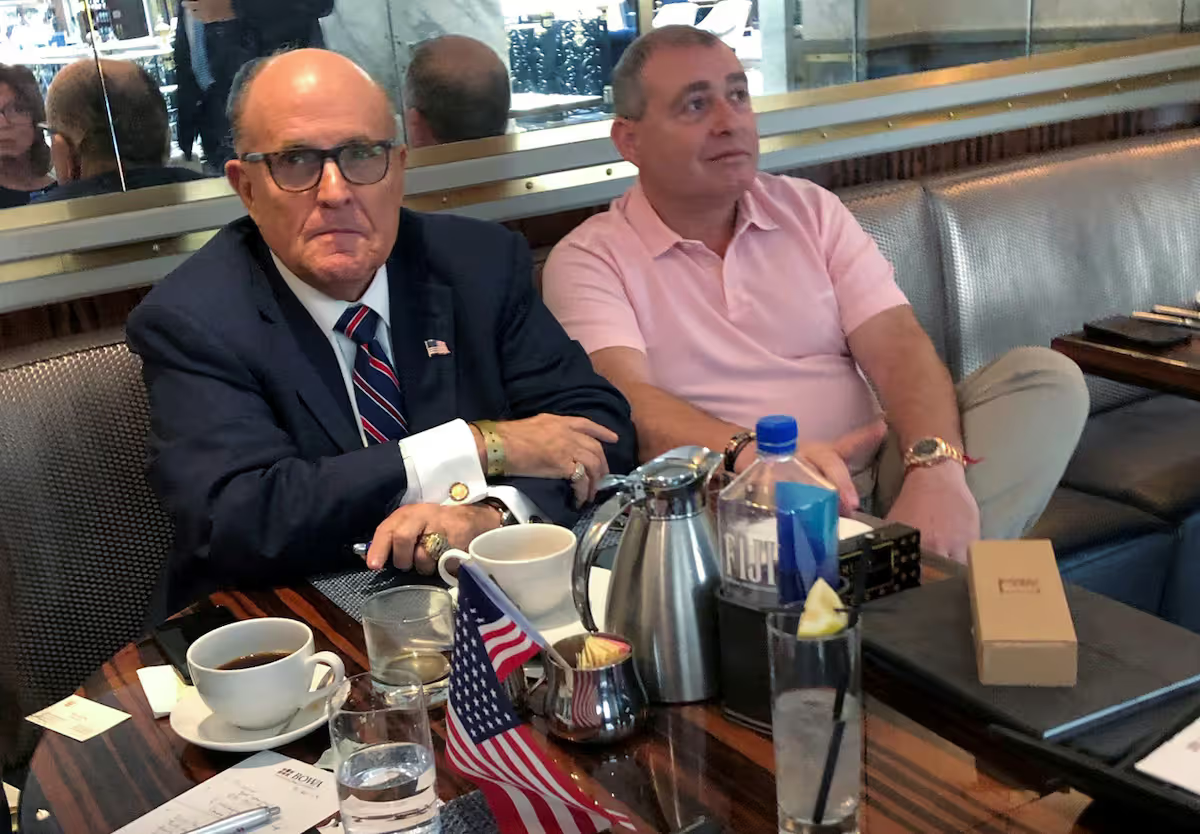
In the course of my discussions with my colleagues, I also found out that there were Ukrainian energy interests that had been in the mix in Venezuelan energy sectors as well as the names again of Mr. Parnas and Mr. Fruman, and this gentleman Harry Sargeant came up. And my colleagues said these guys were notorious in Florida and that they were bad news.
What Hill had discovered was a connective lever, fronted by Giuliani, Parnas, and Fruman, between Rosneft, the Russian oil giant which controlled much of the Venezuelan oil sector and Gazprom, the Russian natural gas giant, which was heavily invested in Ukraine.
The Kremlin hoped to use their two energy giants as a ‘reciprocal shield.’ The strategic logic was that if the United States imposed sanctions on Rosneft for its support of Maduro in Venezuela, Russia would retaliate by restricting natural gas flows through Ukraine. This would effectively cause energy prices to spike in Europe and create a security crisis in Ukraine, forcing Washington to choose between its interests in the Western Hemisphere and those in Eastern Europe.
Bolton had described Giuliani's backchannel negotiations between Venezuela and Ukraine interests as a “drug deal” and advised the administration should have nothing to do with it. Indeed, it was this backchannel that was the basis of Trump's 2019 impeachment, and the reason for Hill's testifying to Congress.
The Guaidó-Hillary Gambit
After Putin's multiple failures to lure Trump into his Venezuela-Ukraine snare, he tried something he thought would be more reliable: he would portray Venezuelan interim leader Juan Guiadó as weak and easily toppled.

According to John Bolton's 2020 memoir, The Room Where It Happened, Trump had a call with Putin wherein the Russian president compared Guaidó to Hillary Clinton, Trump's longtime rival and nemesis (emphasis ours):
An unnecessary negative development was Trump’s decision to call Putin on May 23 [2019], primarily on other subjects, but including Venezuela at the end. It was a brilliant display of Soviet-style propaganda from Putin, which I thought largely persuaded Trump.
Putin said our support for Guaidó had consolidated support for Maduro, which was completely divorced from reality, like his equally fictitious assertion that Maduro’s May 1 rallies had been larger than the Opposition’s. In a way guaranteed to appeal to Trump, Putin characterized Guaidó as someone who proclaimed himself, but without real support, sort of like Hillary Clinton deciding to declare herself President. This Orwellian line continued, as Putin denied that Russia had any real role in the events in Venezuela.
“Putin could easily have come away from this call thinking he had a free hand in Venezuela,” Bolton wrote. But despite the repeated provocations, nudging, and psychological volleys during the spring of 2019, Trump did not take the bait — primarily because Bolton and Hill blocked the overtures, dismissing them as absurd. As Hill testified, the offer was “you stay out of Ukraine ... and ... we'll rethink where we are with Venezuela.” It was simply not a deal they would consider.
Bolton resigned on September 10, 2019. He and Trump had sparred repeatedly over policy, but especially about Russia. As the New York Times reported at the time, “While Mr. Trump seeks to woo President Vladimir V. Putin, Mr. Bolton considers Moscow a hostile player. After Mr. Trump last month suggested inviting Russia back into the Group of 7 despite its annexation of Crimea, Mr. Bolton traveled to Ukraine to reassure its leaders of American support against Russian aggression.”
Sen. Tom Cotton and the Russian Forgery
Immediately after Trump's intentions around Greenland became public on August 18, 2019, Senator Tom Cotton (R-Ark.) began running cover for the president. At a luncheon on August 21, Cotton claimed that he had been the one to suggest the idea to Trump, not Ron Lauder. (This was of course false, but the Baker-Glasser reporting on the Lauder origins would not be released until three years later.)
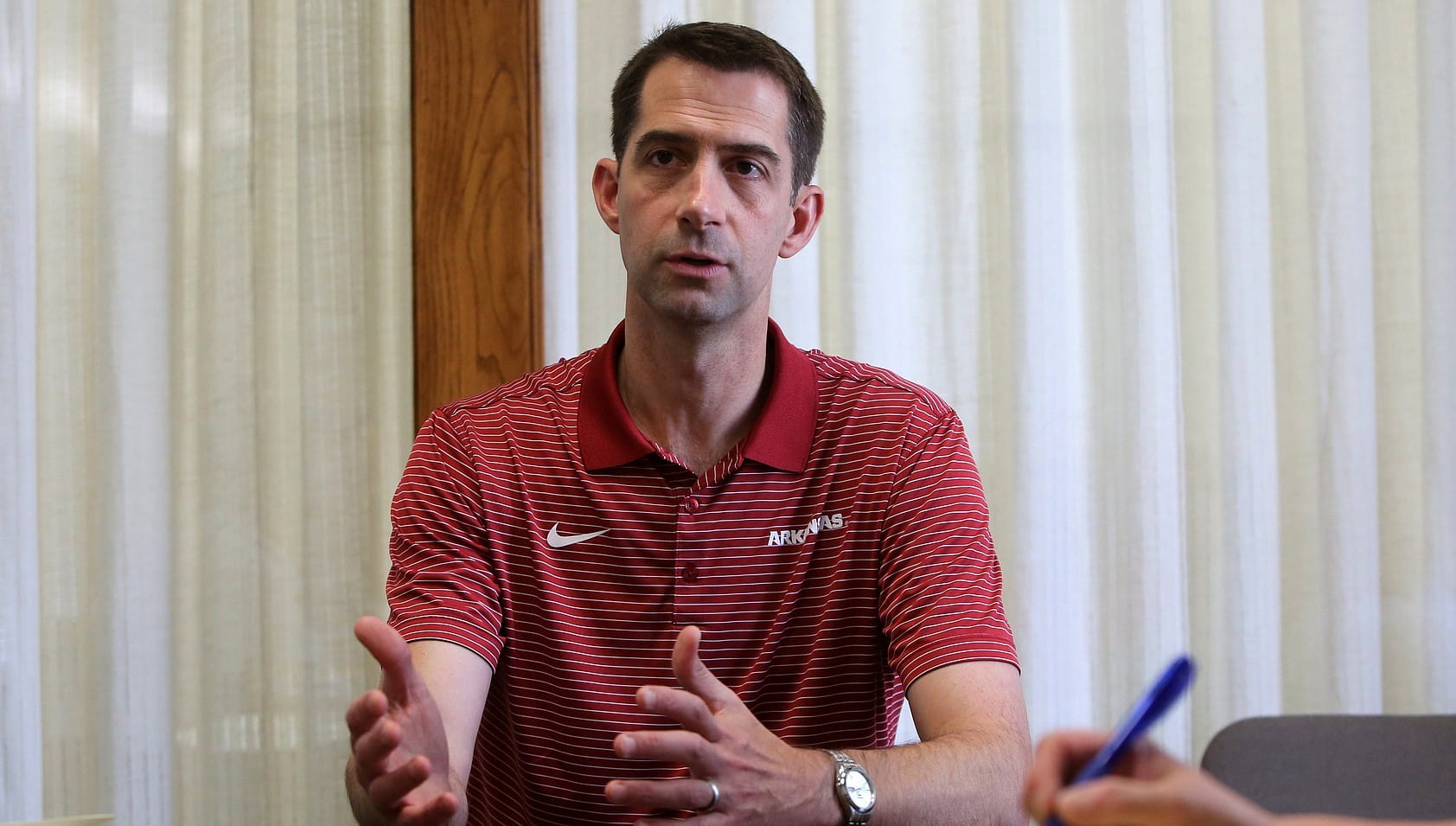
Cotton also claimed that he had met with the Danish ambassador to propose the sale of Greenland to the United States. A few days later on August 26, Cotton published an op-ed in The New York Times arguing that purchasing Greenland was a “no brainer,” reiterating many of the same talking points Lauder had made in 2017.
Shortly afterwards, a letter addressed to Sen. Cotton dated October 23, 2019, emerged online claiming to be from Ane Lone Bagger, Greenland’s Minister of Education, Culture, Church, and Foreign Affairs. The letter seemed to “green light” American intervention in Greenland, or at least invite further discussion.
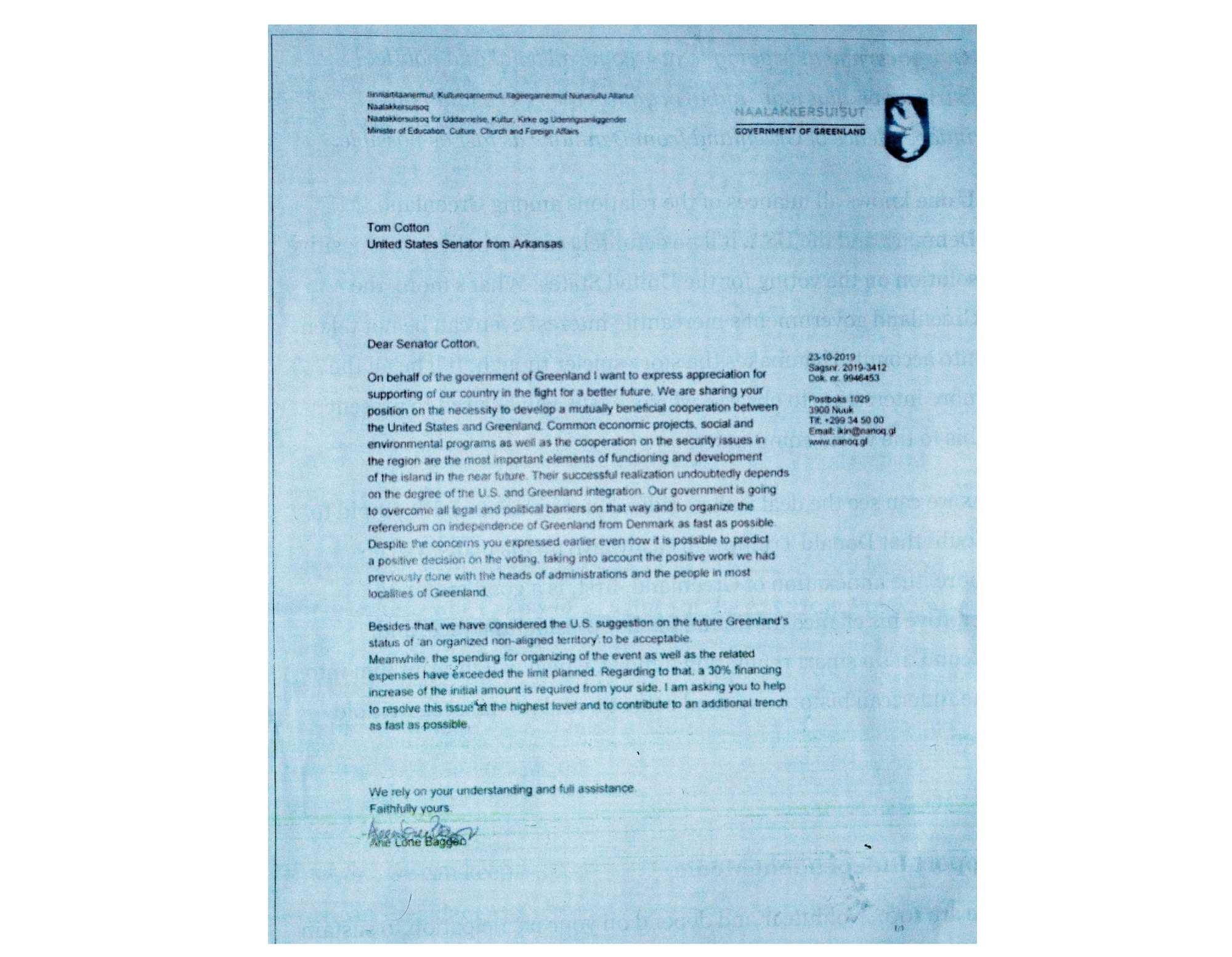
However, the letter was soon declared a forgery — but not before it had been widely circulated online, in Danish newspapers, and in international outlets as evidence of official support of Cotton's proposal. It was all a lie.
As reported in the Danish outlet Politiken on November 11, 2019 (translation ours):
This is the first time in recent times that a fake of this type has appeared in the midst of a tense Danish foreign policy situation.
The purpose of the forged letter is clear, according to a number of experts and politicians: to pull apart Greenland and Denmark apart, and to sow deep distrust between Denmark and the United States.
Major and military analyst Steen Kjærgaard from the Danish Defence Academy, who works on communication strategy and misinformation, calls it “most obvious” that Russia is behind the fake letter.
It remains unknown why Sen. Cotton rushed in to run interference on this operation when it was clearly being run by the National Security Council's team. But it is clear that Russia wished to accelerate US discussions on accession of Greenland.
Zhirinovsky's ‘New Hope’ for 2024
In the wake of Donald Trump's 2020 election loss, propaganda channels were full of wild claims that Venezuela was somehow responsible for election irregularities. Promoted by figures like Rudy Giuliani and Sidney Powell, the narrative falsely alleged that the U.S. election was compromised by a “communist” plot involving Smartmatic voting software, which was purportedly developed in Venezuela at the behest of the late Hugo Chávez to ensure he never lost an election. The story had no relationship with reality and, to most everyone, sounded completely insane.
Vladimir Zhirinovsky on "Vladimir Solovyov Live", Rossiya TV, November 8, 2020.
Amid that backdrop, the now-deceased Vladimir Zhirinovsky, a Russian nationalist politician and commentator made a remarkable offer on November 8, 2020, in the event that Donald Trump might win re-election in 2024:
It will be funny, if next election, Trump will go and win. He will win. Next, in 2024, Trump will win. And we could help him. We could help him this time, really interfere. We didn't do anything, when he was elected in 2016.
And in 2020, if his head would work a little, he would ask us to do something, somewhere. And there, he would win, together with us. We would let him. In Ukraine, we would have taken his position correctly. And he was given an opportunity, in Venezuela, for example.
He will take Venezuela, we will take Ukraine. And he will say to everyone: Look — Venezuela. Tomorrow I will take Cuba. I would help him... But no one is helping him. If we need Trump, then let's help him.
Zhirinovsky reprised the offers made to Fiona Hill in 2019 (and which she said had also been shared in Russian media), offering to back off Venezuela in exchange for disengagement in Ukraine. Zhirinovsky, however, articulated the idea that this offer might be put on ice and revived later, in a second Trump term.
Yalta 2.0
Dr. Robert Person, a professor at West Point, in a 2019 essay titled “Russian Grand Strategy in the 21st Century” says that Russia has pursued a “Yalta 2.0” approach recalling Stalin's carving up of Europe in 1945:
Russia seeks to ensure its military, political, and economic security through an uncontested and exclusive sphere of influence in the territory that once formed the Soviet Union. Essentially a supercharged “Monroe Doctrine” for Russia in the post-Soviet space, this vision would give Russia a privileged position of influence in the foreign and domestic affairs of the countries in Russia’s sphere. Equally important, Yalta 2.0 denies other great powers from pursuing interests and influence within Russia’s exclusive sphere of influence.
Trump's explicit pursuit of the Monroe Doctrine can thus be seen as an explicit mirroring of Russia's Yalta 2.0 strategy.
Retribution Against Bolton
Early on the morning of August 22, 2025, FBI agents raided the home and office of John Bolton, Trump's National Security Adviser, who had served from April 9, 2018 to September 10, 2019.
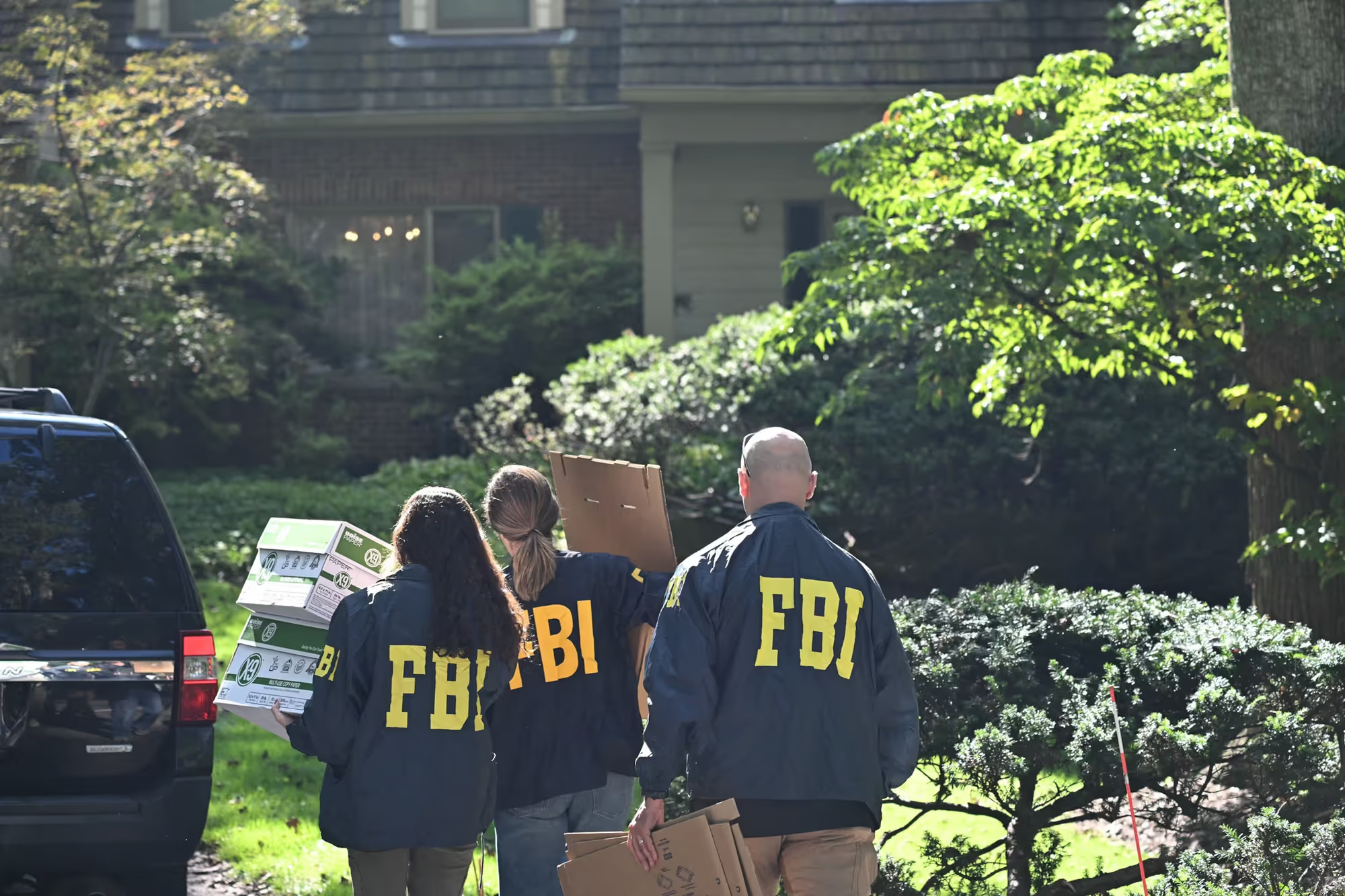
According to the primary sources we have cited here, it was Bolton who was principally responsible for blocking Russia's ‘Monroe Doctrine’ offers in Venezuela and Greenland.
Bolton also refused to engage with Giuliani's so-called “drug deal” that would have given Ukrainian President Zelensky a meeting with Donald Trump in exchange for initiating spurious investigations in Ukraine (one against the Biden family, and another on debunked election interference claims involving Ukraine from 2016.)
Bolton has since been indicted on October 16, 2025 on 18 counts by a Federal grand jury for “mishandling” classified information referenced in his 2020 book that sheds light on these incidents. The specific charges are eight counts of transmission of national defense information and 10 counts of retention of national defense information.
Psychologically Targeted Provocations
Many have speculated that the apparent quid-pro-quo overtures by Russia for Venezuela and Greenland indicate that Putin and Trump have in fact entered into an explicit agreement to share power. After careful research, we do not yet find conclusive evidence of such an agreement.
However, there is ample evidence of a persistent, ongoing effort by Putin to goad Trump into seizing Venezuela and Greenland that spans both his first and second presidential terms. Using the principles of reflexive control, Putin has repeatedly set up informational conditions as well as psychologically targeted provocations designed to get Trump to act, rooted in factors such as his natural disposition towards ‘deal’ frameworks and his visceral disdain for Hillary Clinton.
And this has been effective: Trump has kidnapped Maduro, seized Venezuela, and revived aggressive talk about taking Greenland. And the administration has adopted hemisphere-centric Monroe Doctrine language in all of its communications, especially on social media.
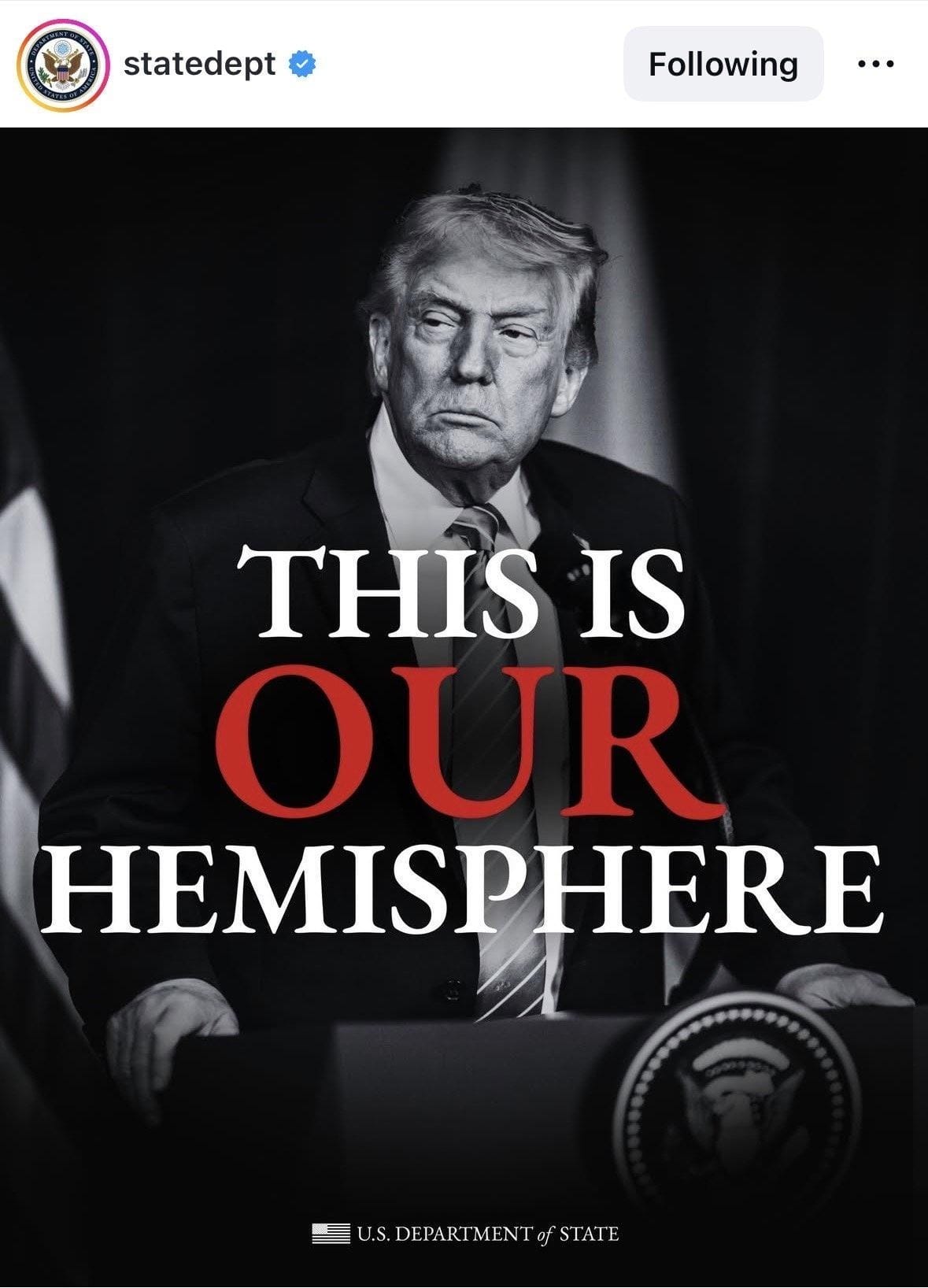 State Department post on X, January 5, 2025.
But Putin should be careful what he wishes for. While Trump's actions have demonstrated consistent loyalty to the Russian dictator, the worst case scenario for Putin is that Trump chooses this exact moment to finally exert leverage. Putin is very vulnerable, having now lost a major part of his oil and shadow banking network. Trump could make Putin's life very difficult; and not all of his advisors (such as jack-of-all-trades Marco Rubio) are as deferential to Russia.
Assuming Putin believes his informal ‘Monroe Doctrine’ gentlemen's agreement is now in effect, he will demand that Trump make good on this by disengaging from Ukraine. Depending on how much leverage Putin exerts, Trump may also decide to follow through on his threat to withdraw US troops from Europe. He and Putin-loyal DNI Tulsi Gabbard may even decide to supply Russia with intelligence that could aid in the capture of Ukrainian president Zelensky — something Russia has tried to effect repeatedly, but has failed to execute on its own. From a security perspective, Ukraine should prepare to not only no longer receive assistance from the United States, but to treat it as a hostile power.
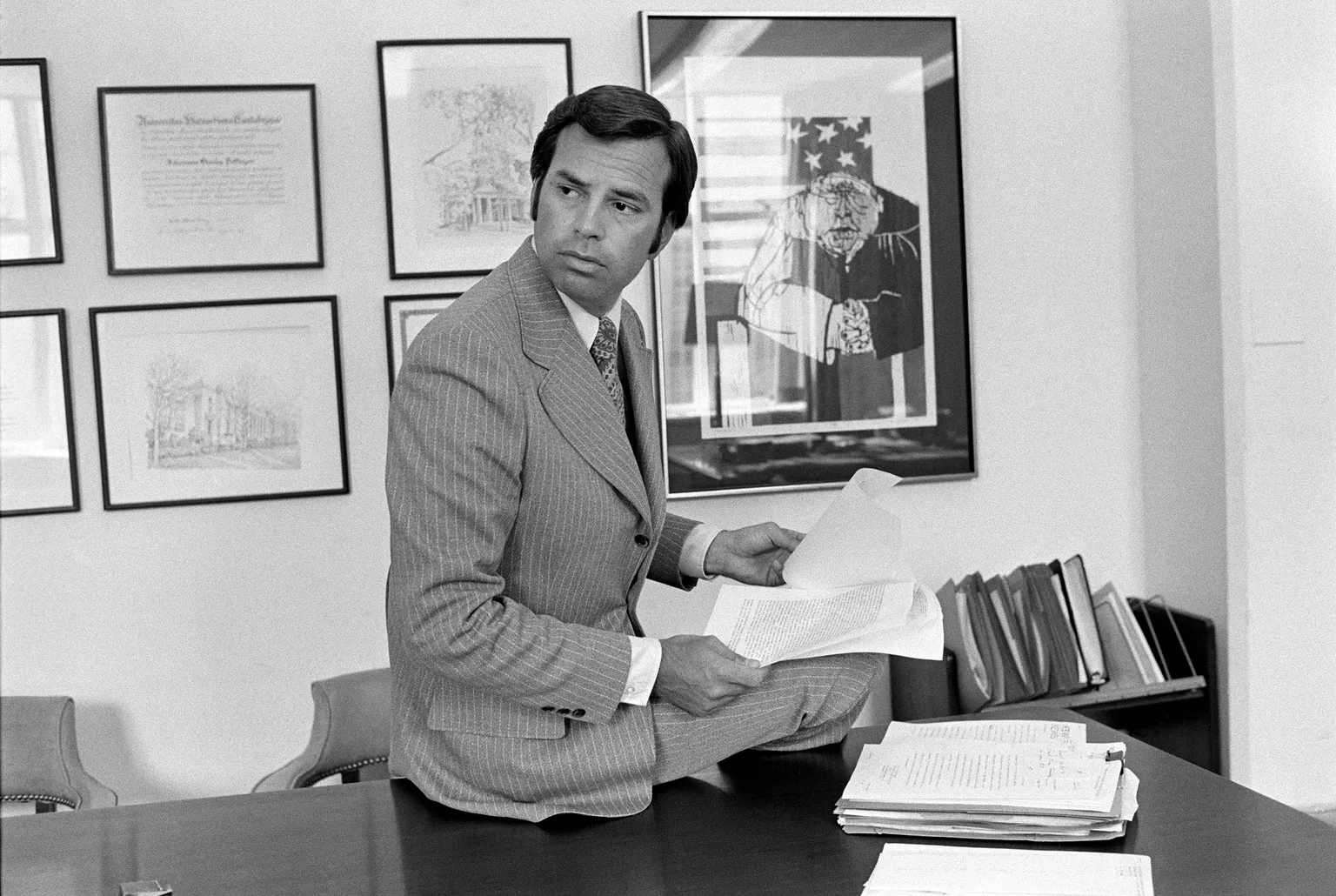
Maduro has retained attorney Barry Pollack, the same attorney who represented Julian Assange — another signal of Russian alignment. The Justice Department has also now dropped its claim that Cartel de los Soles is a real organization, which may lead to the invalidation of the current indictment, dropping of further charges, and could potentially lead to Maduro being sent elsewhere. Exile in Moscow has been mentioned as one likely option.
Hungary's Viktor Orbán, an ally of both Putin and Trump, has also withheld any criticism of Trump's Venezuela gambit, and has said he supports a US takeover of Greenland.
Sen. Tom Cotton (R-Ark.) on Face the Nation, January 4, 2026. (CBS)
Following our viral X post outlining this investigation, Face the Nation host Margaret Brennan asked Sen. Tom Cotton if he was aware that Fiona Hill had testified about a Venezuela-Ukraine deal. He dodged the question. And to the best of our knowledge, no one has recently confronted him about his 2019 role in the Greenland operation.
A Multiplicity of Incentives
“We're in the oil business,” Trump said matter-of-factly at his post-invasion press conference. Indeed, oil is a key prize in the Venezuela raid; the country also possesses significant assets in gold and other natural resources. Major Trump donor Paul Singer acquired Citgo, the US subsidiary of PDVSA (the Venezuelan state oil company), in 2024 for $6 billion — a bargain price because of the sanctions then imposed. If he can manage to hold onto his stake, he could be a major beneficiary of Trump's invasion.
Dave Troy
As we previously reported, tech entrepreneurs connected to Elon Musk, Ken Howery and Dryden Brown, expressed renewed interest in the Greenland deal in 2024, to pursue a “network state” libertarian development project. Some have noted connections to the “technocracy” movement, of which Musk's grandfather was a leader in Canada, which in 1940 published a map of the “Technate of America” spanning from Greenland to Venezuela, mirroring the Monroe Doctrine strategy — a vision that still seems to resonate with Musk.
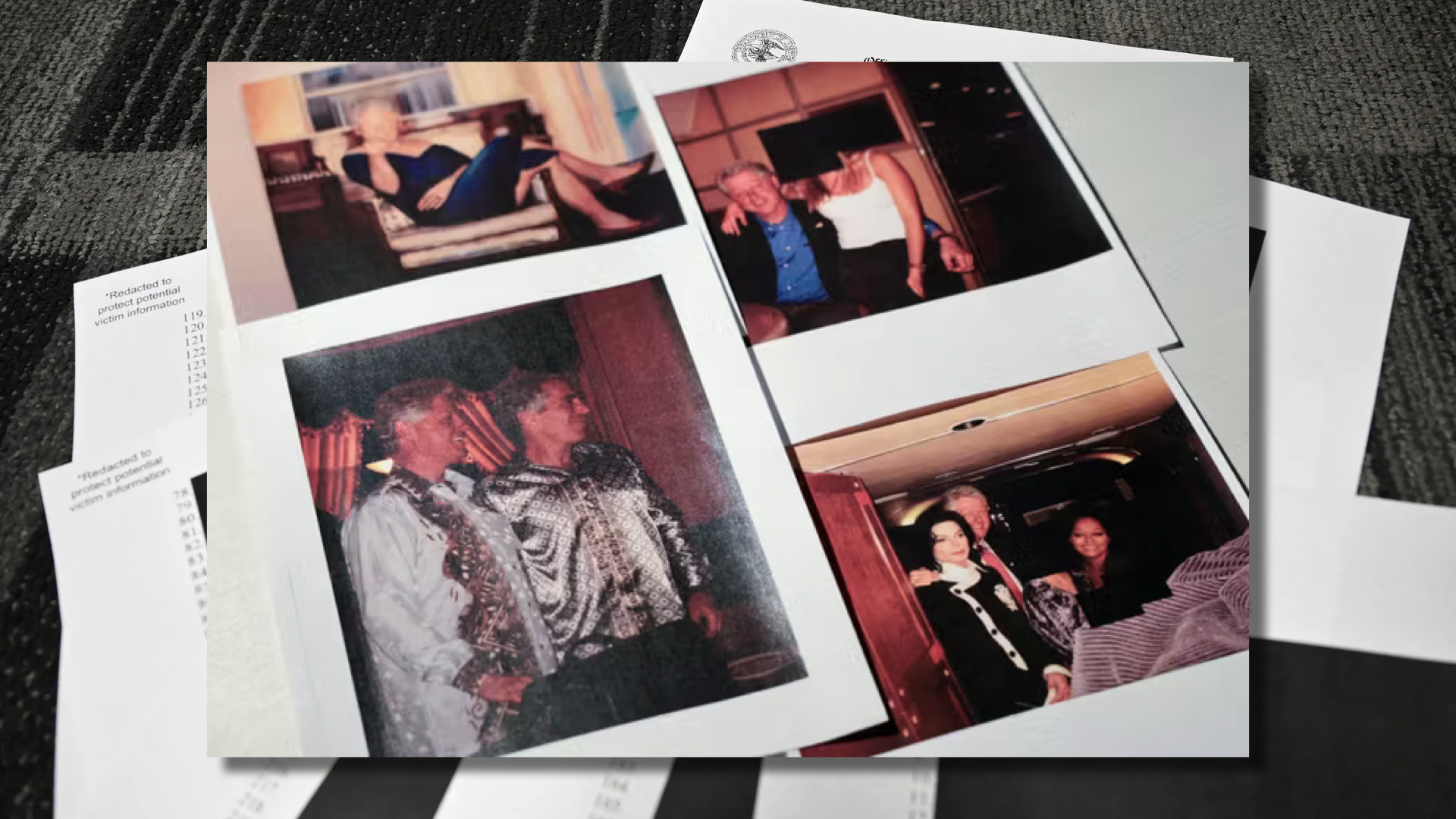
If the so-called “Donroe Doctrine” realignment is the main event, the many opportunities for profiteering have served as dangles and incentives to catalyze it. And of course, Trump has shifted political discourse away from ongoing Epstein disclosures to his own actions — a change he welcomes.
What to Expect Next
Many observers have suggested that Trump's actions in Venezuela set a precedent that will encourage increased adventurism from both Putin and China's president Xi. However, Trump's action, while brazen, was not a particularly remarkable precedent. The US has taken similar actions many times before, and Putin has aggressively attacked his neighbors for years.
China needs no one's permission to advance on Taiwan, and will do so at a time of their choosing — if indeed they choose to do so. As we have previously reported, China has a history of relying on economic, political, and information warfare to absorb rivals over a long period of time. Only if forced to save face or exploit some specific time constraint would we expect Xi to engage in military action against Taiwan, and it is very unlikely they would choose to do it in response to external actions elsewhere. Even as China has important interests in Venezuela, Trump has said “we are in the oil business” and will continue to sell to existing customers.
The Trump administration is now openly signaling that it intends to make moves in Cuba, Colombia, Greenland, and anywhere else in the hemisphere it wishes to impose its will. Such imperialism has already given the Kremlin ammunition to accuse the United States of ‘neocolonialism,’ bolstering its claims on Ukraine, its ‘near abroad,’ and ultimately on Europe. We have unleashed monsters.
Overall, we conclude that there has been a longstanding effort by Russia to induce the United States to seize Venezuela and Greenland with the goal of re-establishing great power politics and fracturing Western alliances. NATO, the United Nations, and the European Union will all be challenged if the US continues on this hemispheric romp.
Had Trump won in 2020, it is likely that the currently unfolding operations would have taken place then. Had Putin prevailed in effecting his “Monroe Doctrine” strategy in 2021, conditions for his invasion of Ukraine would have been significantly more favorable, as he expected to effect US disengagement in Ukraine. Trump's claims that Putin would not have invaded had he been president are clearly fabricated and do not hold up against even the slightest inspection.
We still don't know what Putin and Trump discussed in Anchorage that left his team visibly shaken. Perhaps it was the outlines of this plan, threats of kompromat, or other leverage against Trump.
Americans and Europeans should take stock of where this is likely headed and exert all possible mechanisms of control to curb US militarism and to protect the interests of Ukraine and Europe. The United States is no longer a reliable ally of the West. Perhaps that can be remedied, but in the meantime, it appears that 2026 will likely be characterized by a series of damaging, bewildering Rubicon crossings that lead to unimaginable, if not nightmarish, horizons. ◼
Update: On January 5, 2026, Russia expert Julia Ioffe shared her assessment on the Stephen Colbert show. “According to Fiona, she thinks this is now back in the air, and Medvedev, the former Russian president, who used to be a liberal, is dropping these hints again, like ‘let's do a little swap, Donnie.’”